ENVELOPE FINANCE
HELPING PEOPLE PAY OFf credit card debt
Americans carry significant credit card debt, while interest and late fees can make getting out of debt increasingly difficult.
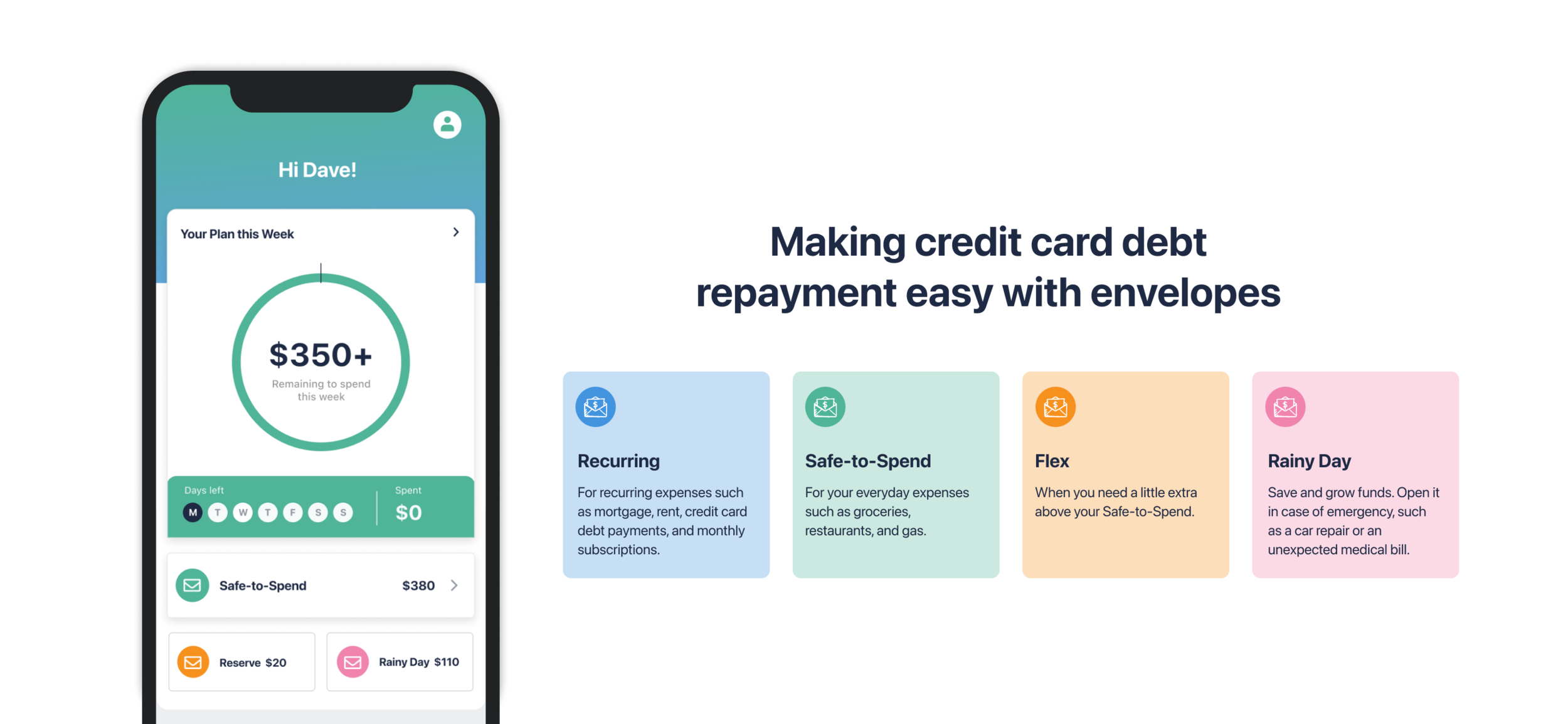
Envelope Finance is a debt repayment app designed to help people take control of their credit card debt and build healthier financial habits. Based on the envelope budgeting system, it organizes money across four areas—Expenses, Safe-to-Spend, Reserve, and Rainy Day—helping users understand what they can spend, save, and put toward becoming debt-free.
I worked directly with the co-founder as the sole product designer, translating the initial concept into an MVP through UX design, user research and development support.
Role: Product design, UX research
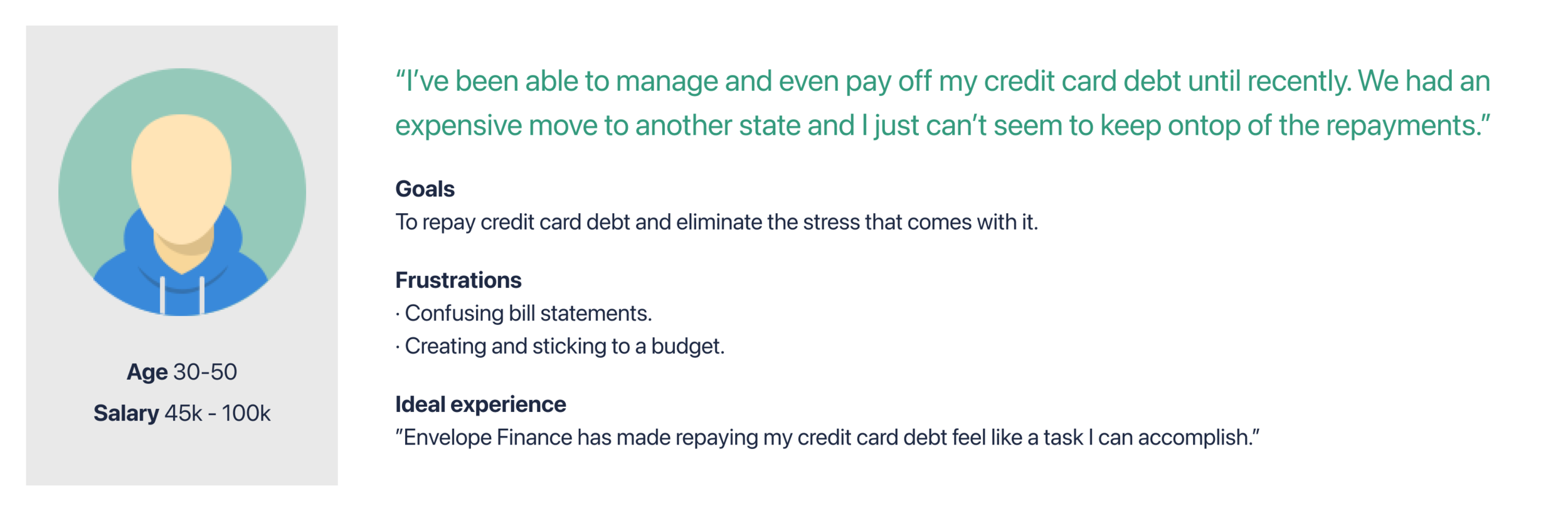
qualitative personA
The experience was shaped around people who wanted to eliminate credit card debt but struggled with confusing statements, unpredictable expenses, and maintaining a budget.
The opportunity was to make repayment feel achievable, replacing financial complexity with a clear plan customers could understand and follow.
app architecture
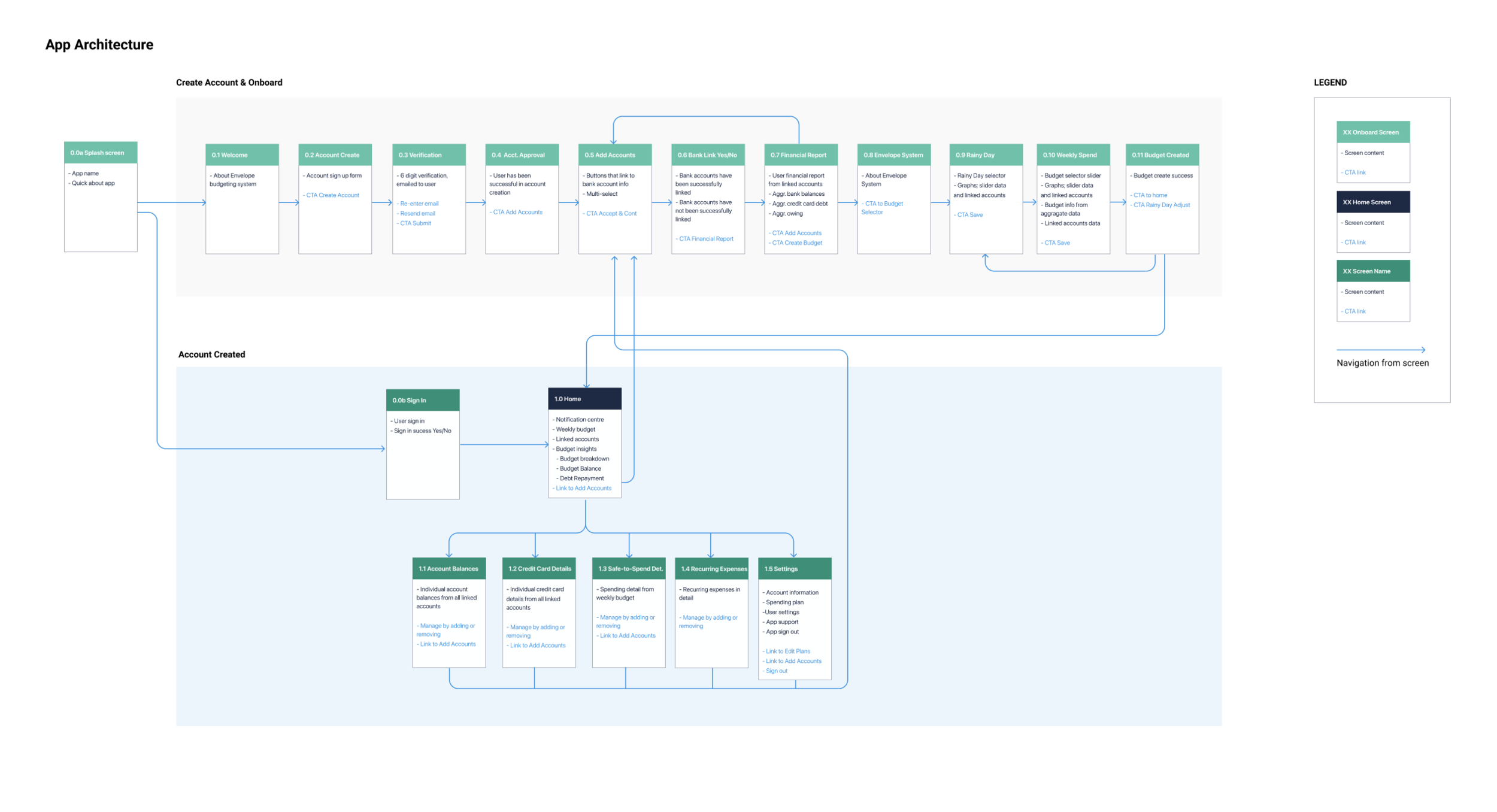
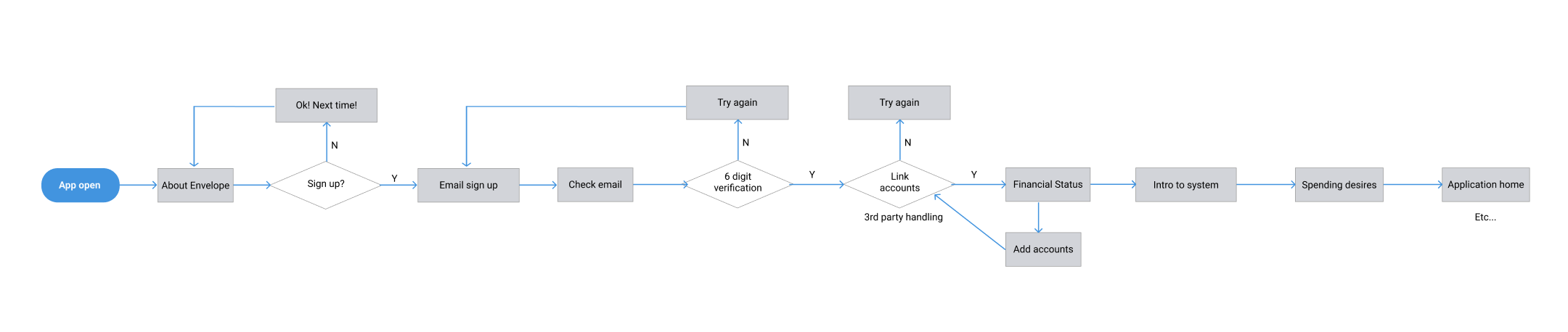
A complete app architecture connected account creation, financial assessment, personalized budgeting, and ongoing debt management.
The structure established a clear path from understanding someone's financial situation to helping them take action, while keeping essential tools accessible after onboarding.
Contact me for a more in-depth review
Turning financial complexity into a personal plan
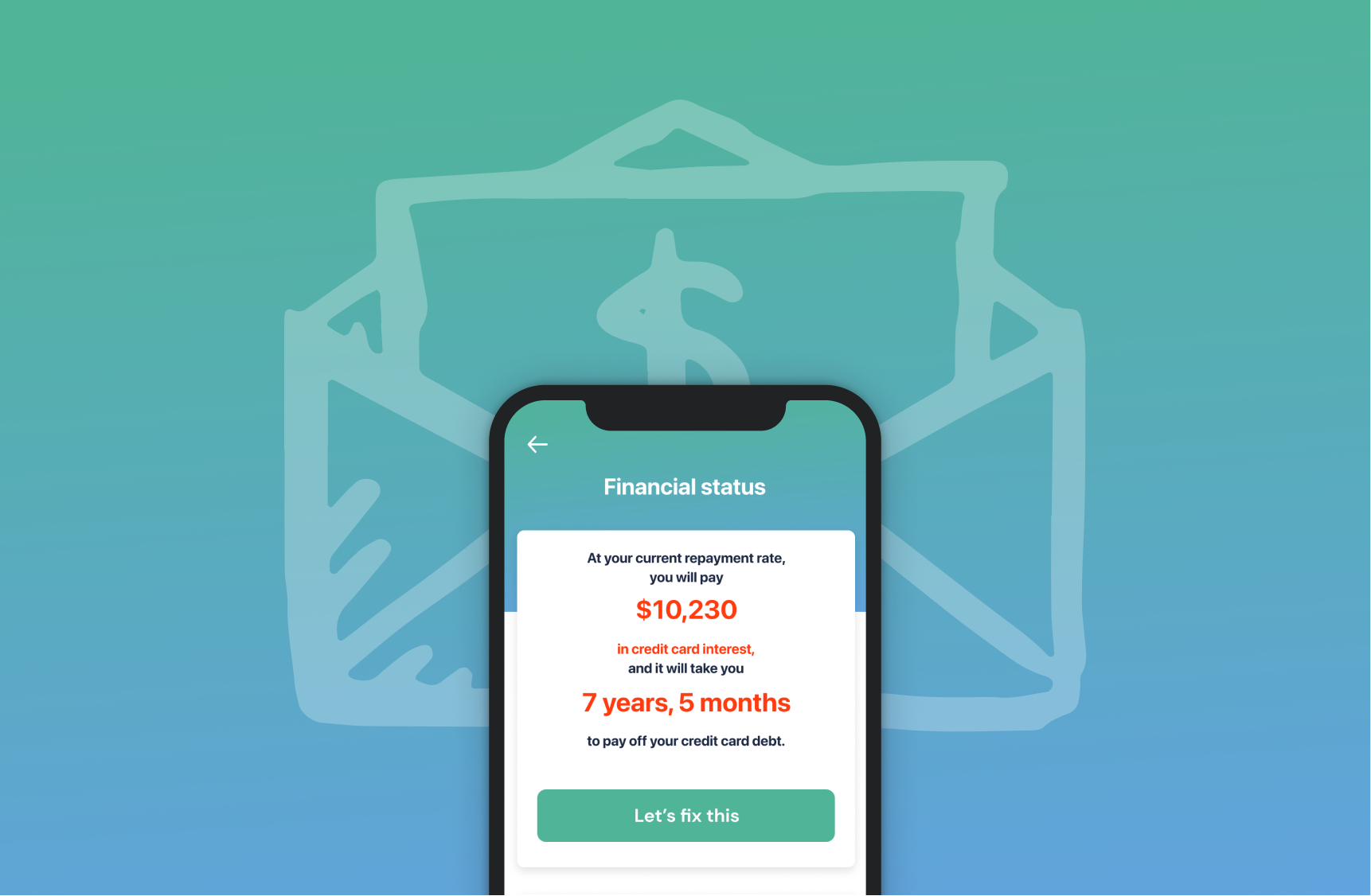
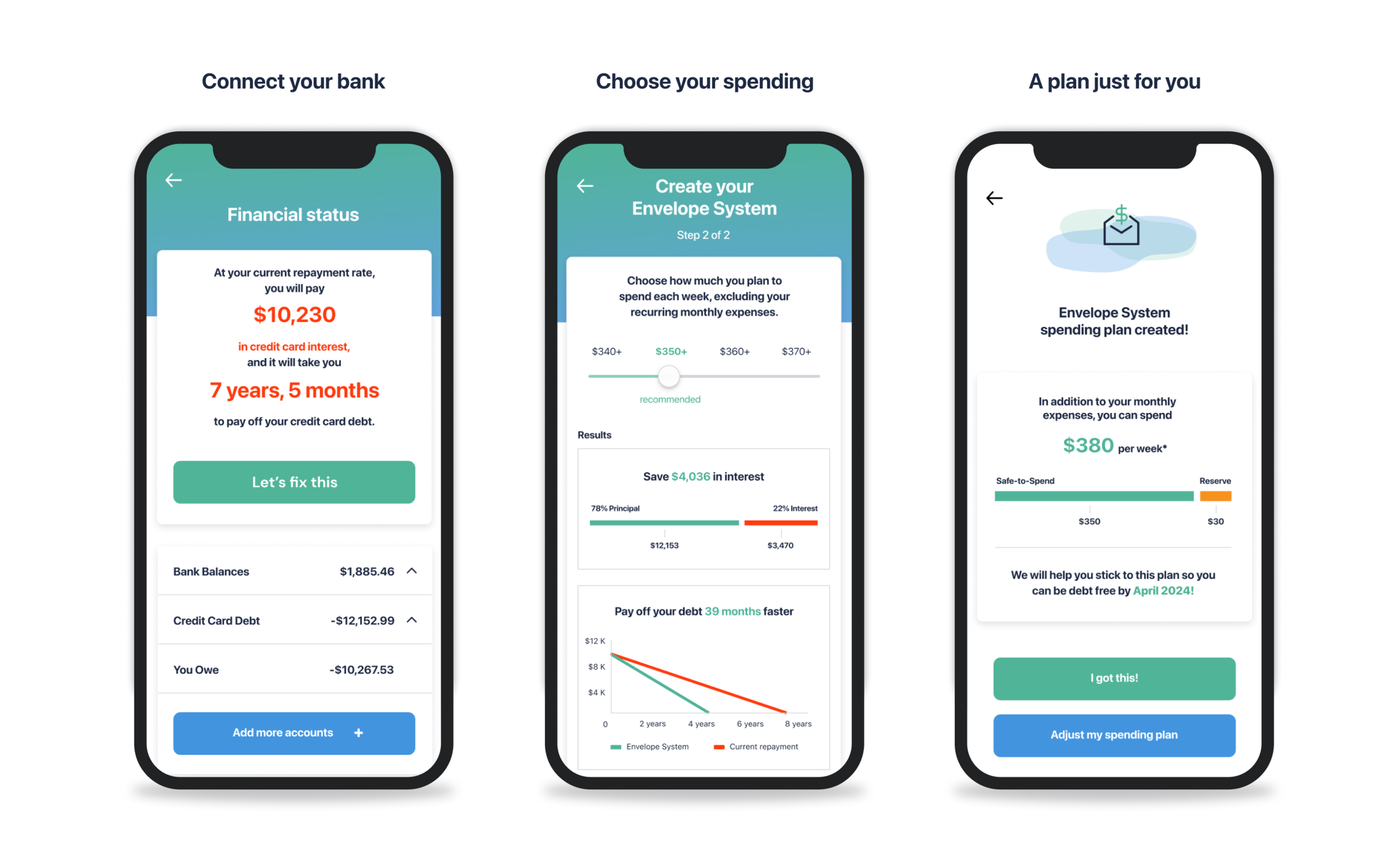
Onboarding was designed to connect customers' accounts, reveal the cost of their current repayment habits, and help them build a realistic spending plan. Rather than simply showing how much debt someone owed, the experience demonstrated how changes to their budget could reduce interest and accelerate repayment.
Making progress visible every day
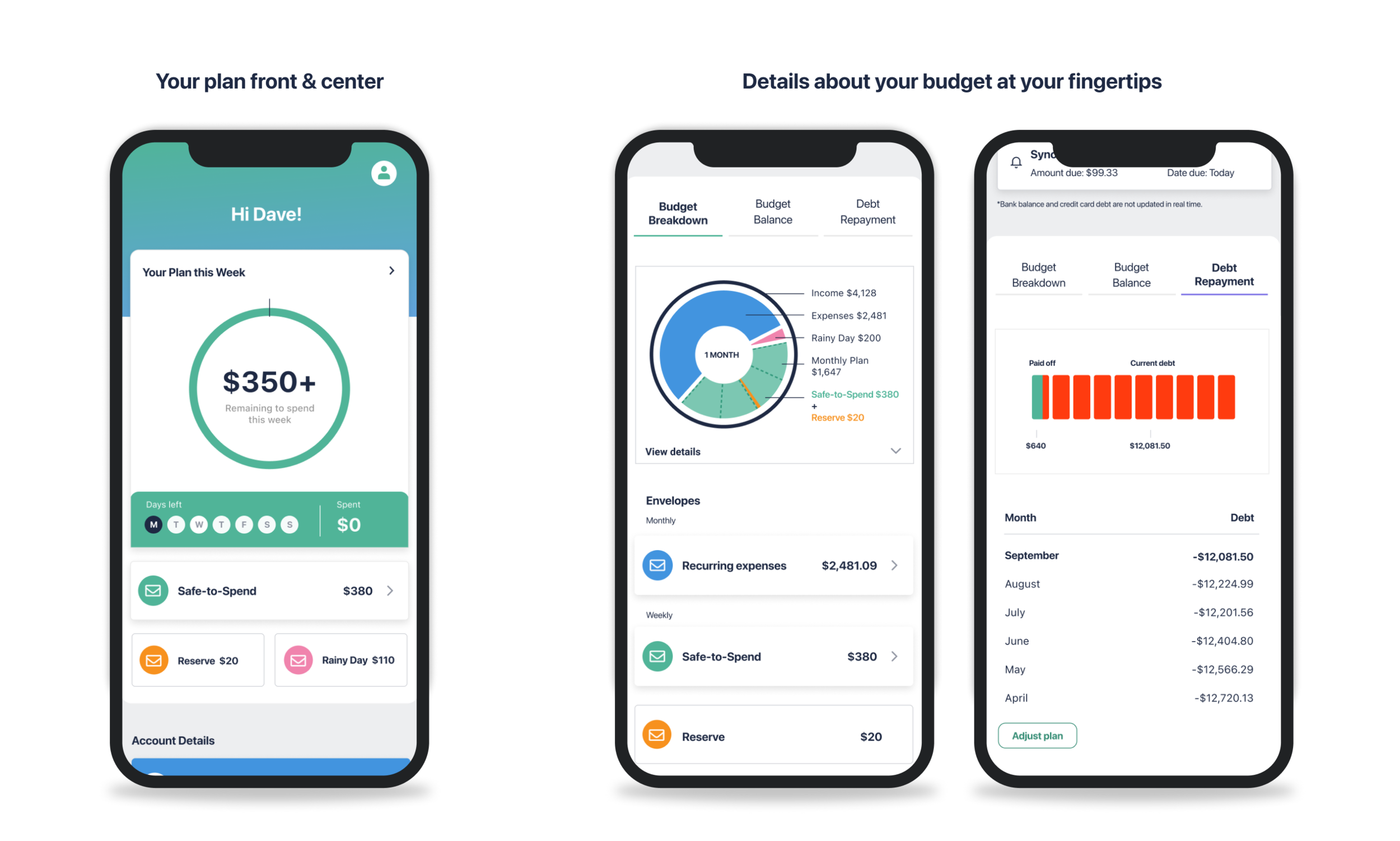
The dashboard puts each customer's weekly spending plan front and center, showing what remains available to spend alongside their budget breakdown and debt repayment progress.
Clear visualizations turn financial data into practical information, helping customers make everyday spending decisions while staying focused on their longer-term goals.
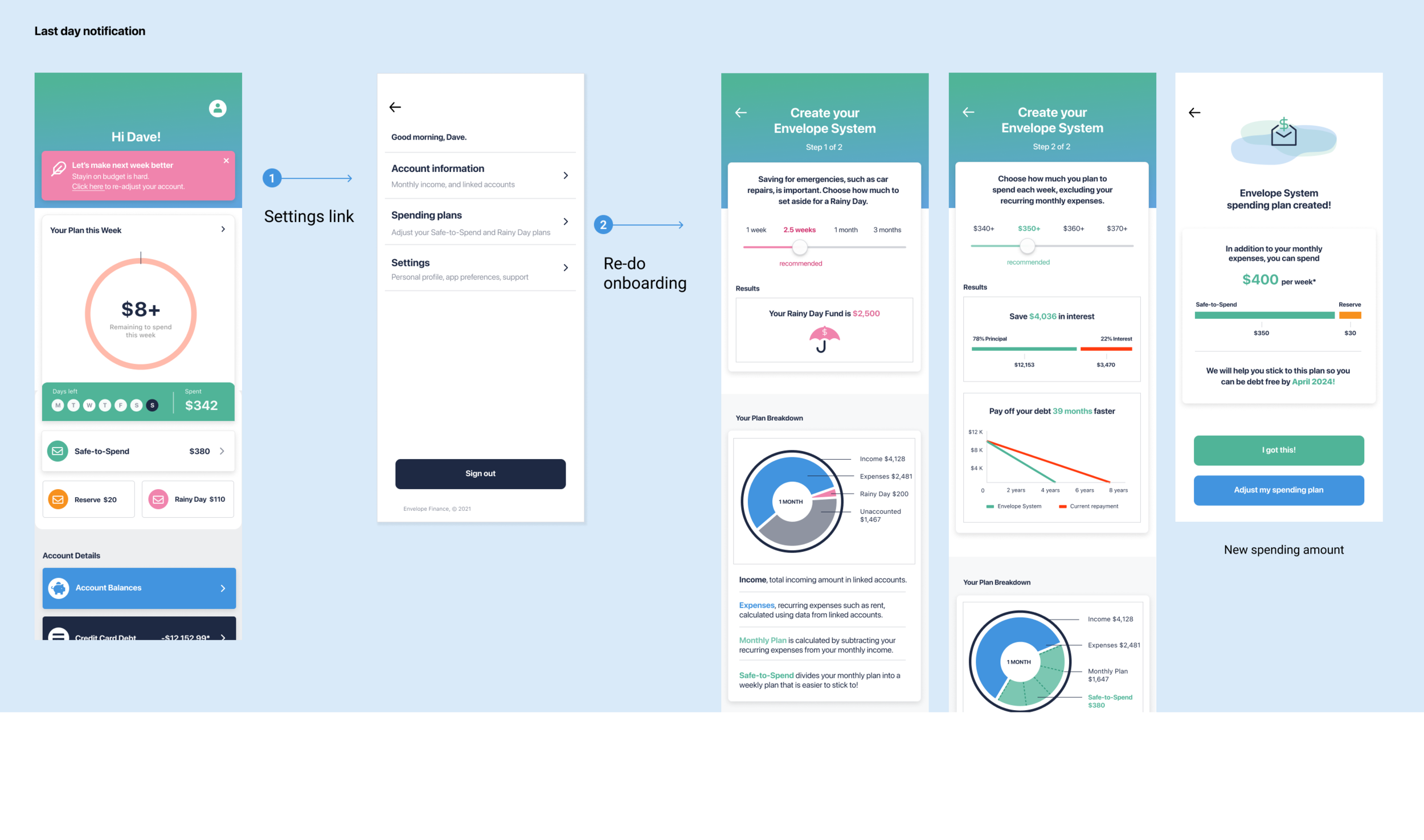
Contextual notifications alert customers when their spending plan needs attention and provide a way to revisit their budget as circumstances change. The goal was to make the plan adaptable rather than rigid, allowing customers to make adjustments without losing sight of their repayment goals.
Testing and refining the experience
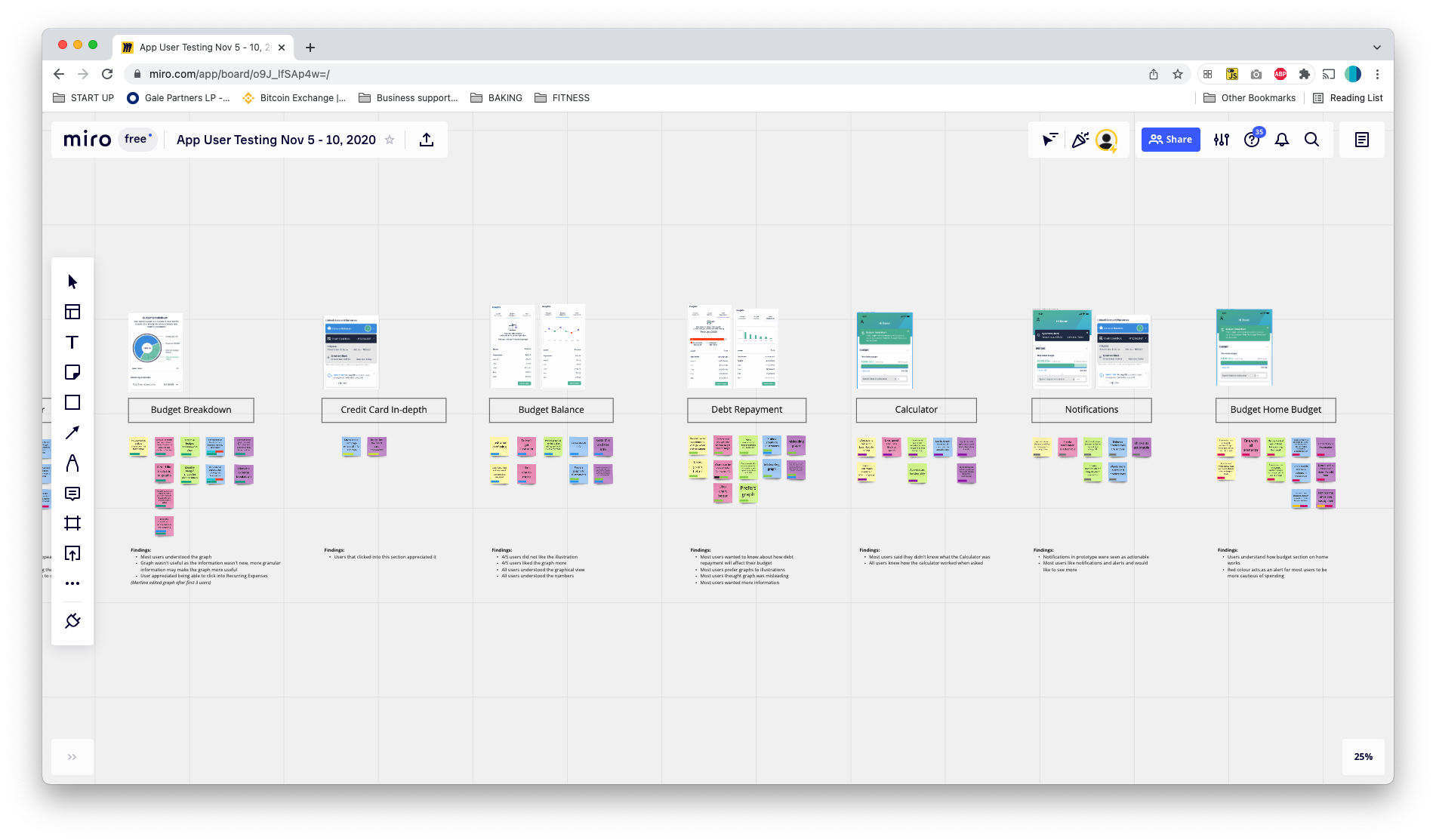
Usability testing explored how customers understood the budget breakdown, debt repayment information, calculator, notifications, and dashboard. Feedback across these key interactions informed refinements to the experience, helping identify where financial information needed to be clearer and where customers needed more guidance.
*Based on anonymized, aggregate data used to produce the figures in S. Agarwal, S. Chomsisengphet, N. Mahoney, J. Stroebel, “Regulating Consumer Financial Products: Evidence from Credit Cards,” Quarterly Journal of Economics (2015)